How an optional phone-number field achieved 51% uptake, with 26% of those leads converting into sales.
Role: Product Designer
Scope: Insight through to release and measurement
Product: Online vehicle Deal Builder
Research: Journey data, branch feedback and live experiment results
Collaborators: Product, engineering, digital leadership and branch sales teams
Scale: More than 400,000 deals created annually
Summary
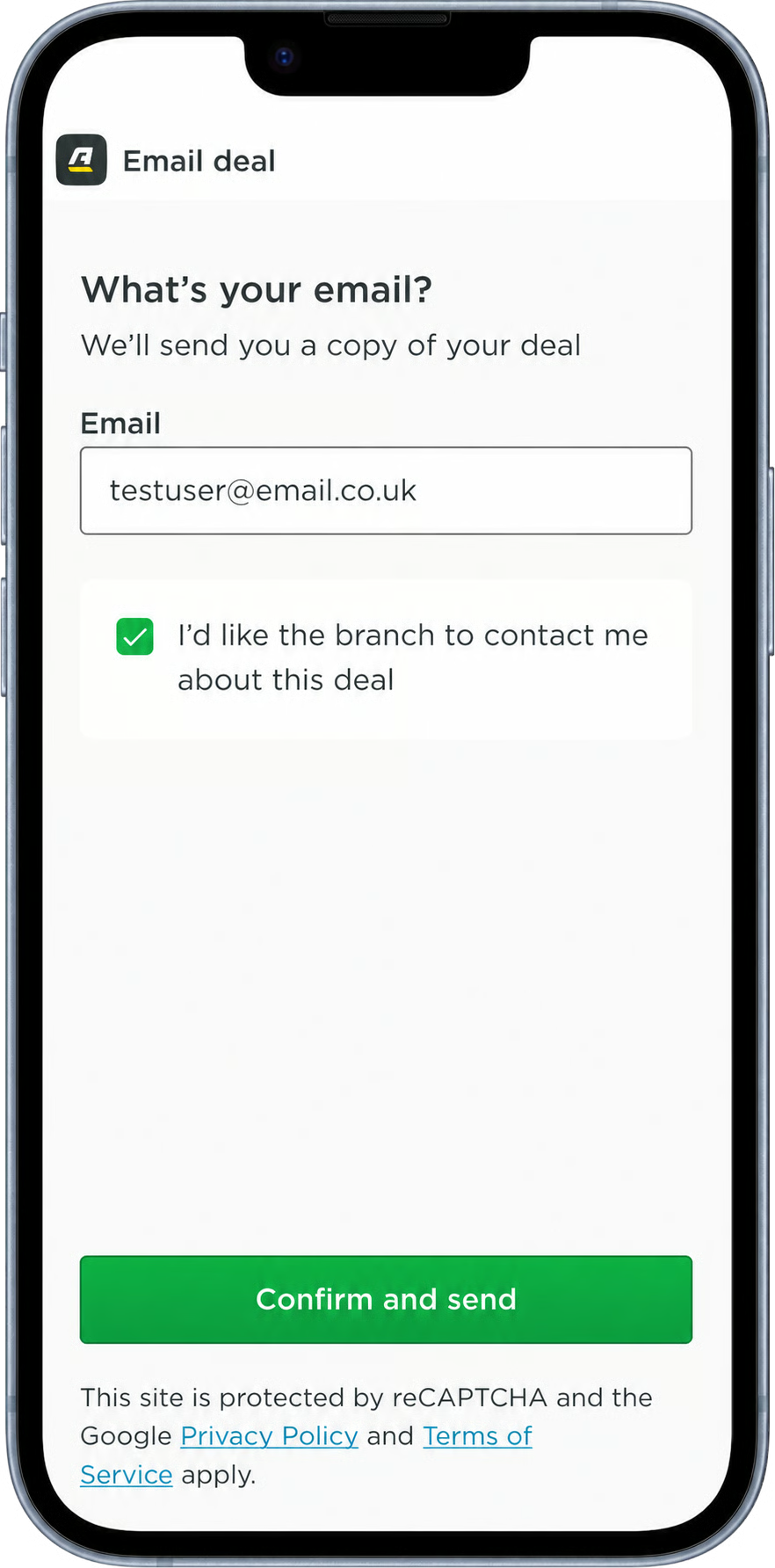
Customers could build a vehicle deal online and email it to themselves, but only 1% asked to be contacted by a branch.
The existing follow-up happened by email, despite branch teams consistently telling us that phone conversations converted more effectively.
Adding a phone-number field had previously been rejected because of concerns that it would create friction. Instead of continuing to debate the assumption, I proposed a small, measurable and reversible experiment.
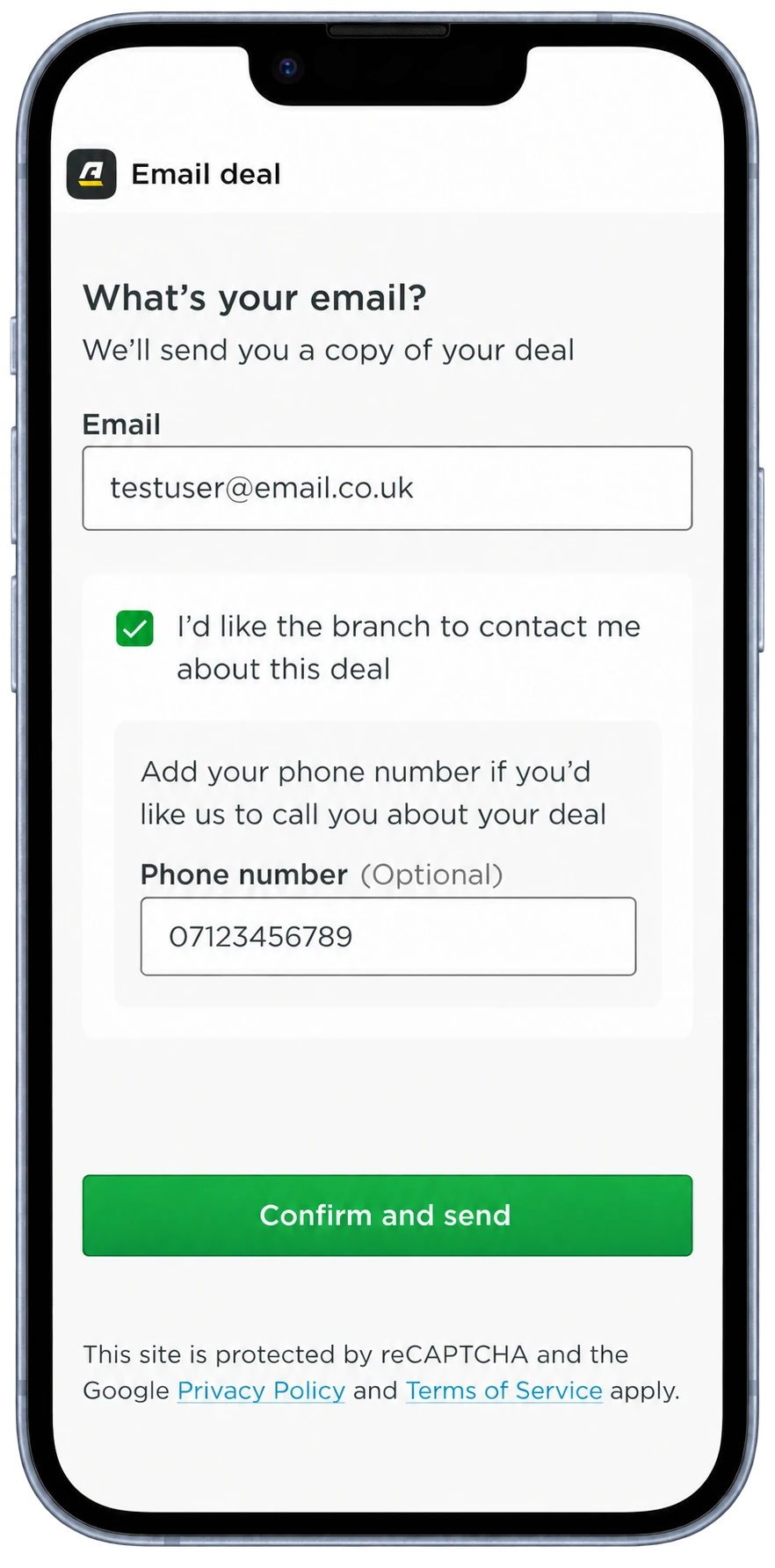
We added the phone number field and made it optional. During the experiment, 51% of customers provided a phone number and 26% of those leads went on to purchase a vehicle.
The opportunity
Customers saving a personalised deal were demonstrating strong purchase intent, but the journey captured little information that branch teams could act on.
The opportunity appeared simple: ask customers for a phone number when they emailed their deal.
The concern was that another field could reduce completion rates, a key metric for the digital team. We had two competing assumptions but no evidence to support either.
My approach: Reduce the ask, increase the learning
I saw an opportunity to test whether capturing phone numbers would improve conversion and demonstrate that we could learn faster by testing assumptions rather than debating them.
How I built the case
- Connected behavioural and sales data: I mapped high engagement with the Deal Builder flow against evidence that branch teams converted customers more effectively by phone. This exposed the opportunity cost of the existing email-led approach.
- Reframed the risk: In conversations with the Head of Digital, I positioned this as a reversible experiment, not a permanent feature launch. We could remove it immediately if completion rates suffered. The question shifted from “Will this work?” to “What will we learn?”
- Defined success upfront: Before development, I proposed measuring phone-number capture, conversion to sale and any effect on journey completion. This reduced the potential for post-launch debate and gave stakeholders a clear decision framework.
Design decisions to minimise risk
- Made the phone-number field optional
- Positioned it after deal customisation, when customer investment and intent were highest
- Retained email to preserve the existing journey
- Kept the implementation deliberately small so we could release and learn quickly
The experiment was designed, built and released within two weeks.
Outcome
The experiment produced a clear result:
- 51% of customers provided a phone number
- 26% of those phone leads converted into a vehicle sale
This wasn’t a 26% uplift. It meant that more than one in four customers who supplied a phone number subsequently purchased a vehicle.
The experiment connected the digital journey more effectively with how branch teams converted customers. It also gave other squads a practical example of how small, controlled releases could replace internal debate with evidence.
What I learned
Reduce the cost of being wrong
Making the change optional and reversible reduced the risk and made it easier to secure support.
Measure the outcome, not just the interaction
Phone-number submission showed customer willingness. Connecting those leads to completed sales demonstrated the actual value.
Small experiments can build confidence
One experiment didn’t change the organisation’s culture, but it gave other teams credible evidence that they could test assumptions quickly and safely.