Summary
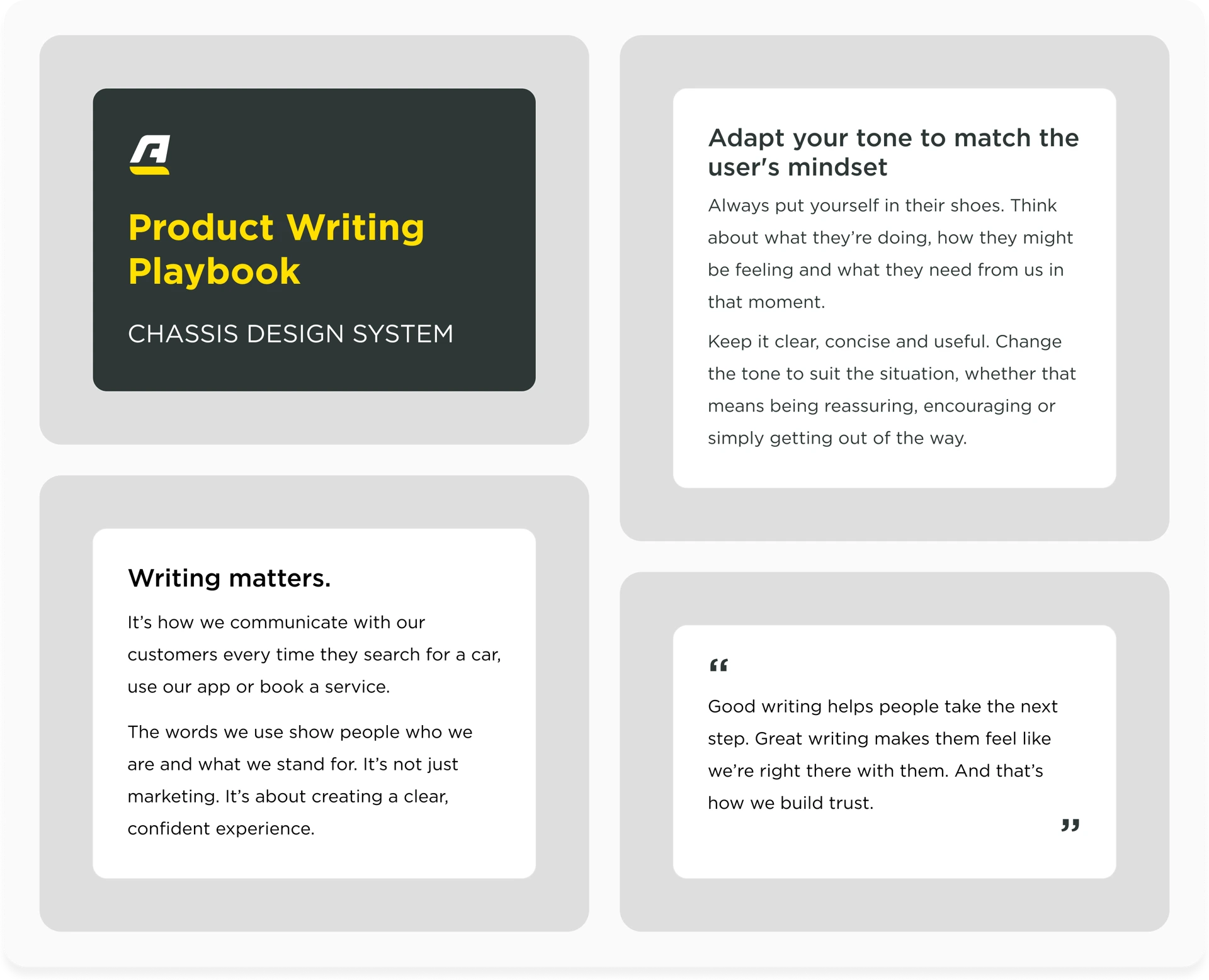
AC Digital had no shared content standards across product squads. Teams wrote differently, copy reviews relied on opinion, and teams duplicated work. I built a Product Writing Playbook that teams actually adopted, giving squads the confidence and tools to write consistently.
My role
I created AC Digital's first Product Writing Playbook and led its adoption across 20+ autonomous product squads, working as Lead Product Designer.
This involved:
- Building the content standards from scratch, grounded in real product examples rather than abstract rules
- Securing cross-functional alignment with Product, Marketing, Legal, and Compliance to create shared ownership
- Driving adoption through hands-on coaching and workshops that taught squads to simplify legal language while maintaining intent
- Enabling teams to make evidence-based content decisions autonomously using shared principles
The challenge
- Inconsistent voice, tone and terminology across products
- Teams were re-writing the same content, causing rework and delays
- Copy reviews were opinion-based, leading to circular debates with senior stakeholders
- Lack of shared principles made it difficult to defend decisions or scale consistently
Approach
I focused on creating practical guidance that solved real problems, not documentation that would sit unused. Adoption had to come from teams seeing value, not from top-down mandates.
How I built the standards:
- Involved designers from across squads to gather pain points and real content challenges, ensuring the guidance addressed actual problems they faced
- Iterated continuously based on feedback at every stage, refining principles as squads tested them in real work
- Grounded every principle in real product examples from AC Digital, showing squads exactly how to apply them rather than abstract rules they'd have to interpret
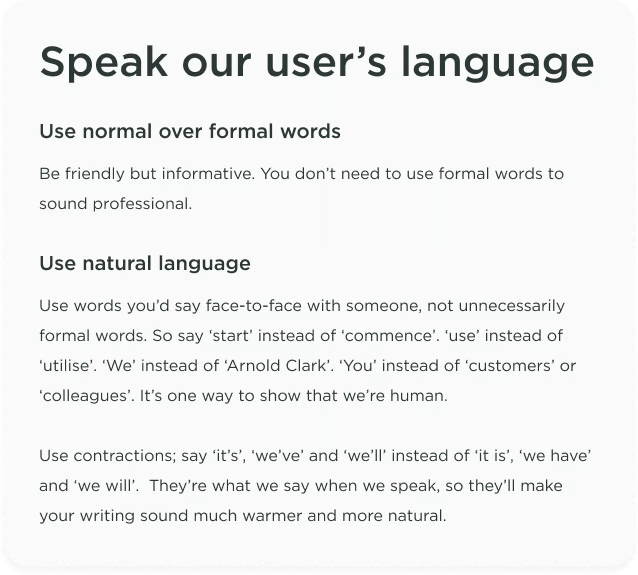
How I secured Legal and Compliance buy-in: I borrowed principles from Monzo's content guidance and created before/after examples showing how plain English could maintain legal meaning without formal language. This demonstrated that "formal doesn't equal professional" and gave Legal confidence that simplified copy wouldn't create compliance risk.
How I drove adoption:
- Presented the playbook to product teams (PMs and designers) through a show-and-tell that demonstrated immediate value
- Offered ongoing support rather than a handoff, acting in a consultancy role until the standards became second nature and embedded in team processes
- Coached designers through real content reviews, showing them how to justify decisions using the shared language
The turning point: Teams adopted the playbook voluntarily once they realised it made their work easier. Uniformity meant squads could reference each other's previous work, accelerating content creation rather than slowing it down.
Deliverables
- Product writing principles grounded in real AC Digital examples, showing squads how to apply them immediately
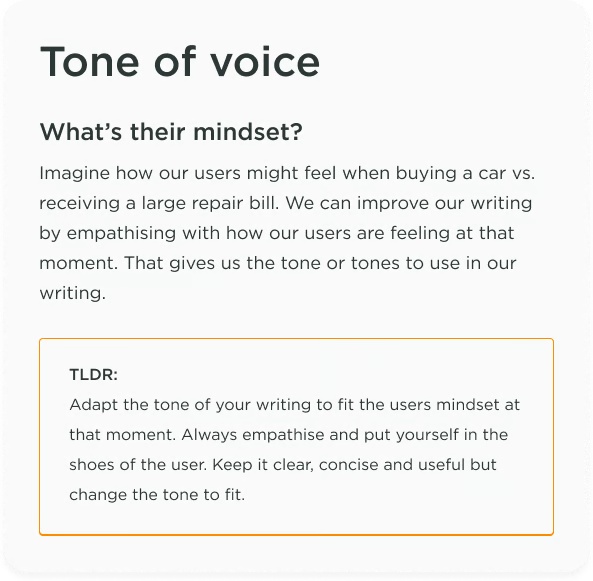
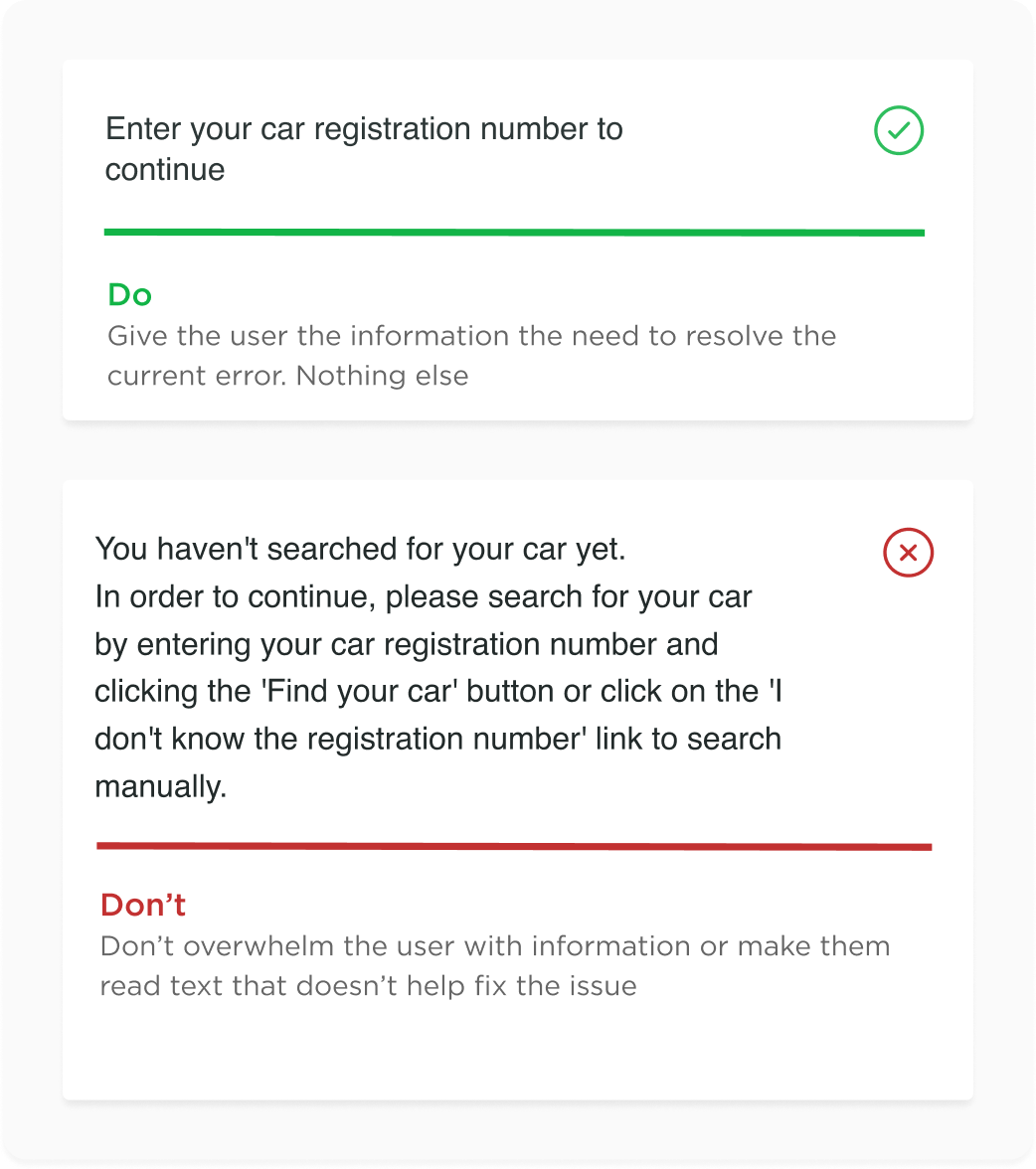
- Tone-of-voice framework with "do/don't" content patterns for consistent cross-product application
- Templates and copy-review checklist to embed repeatable workflows and give designers autonomy
- Scalable documentation designed for integration into the design system and easy maintenance
Together, these enabled squads to apply standards independently and maintain content quality without central gatekeeping.
Impact
The playbook was adopted across squads within 12 months, raising content standards across AC Digital. Copy-review cycles shortened, rework decreased, and designers gained the autonomy to justify content decisions using shared principles rather than opinion.
For customers, clearer content made journeys easier to complete. Microsoft Clarity recordings showed users moving smoothly through areas that had previously caused hesitation.
For the business, the playbook gave Legal, Compliance and Product shared standards for reviewing copy. Teams could explain their decisions using agreed principles, reducing reliance on personal preference.
The measure of success: I was able to step back from my consultancy role as the guidance became embedded and teams applied it naturally. The standards were adopted, not enforced
What I learned
On adoption: Involving designers in the guidance and showing its value through real examples helped teams adopt it willingly. The playbook succeeded because teams saw it as theirs, not mine.
On stakeholder management: Showing Legal and Compliance concrete before/after examples was more effective than abstract arguments about "plain English." People need to see the solution working before they'll trust it.
The playbook’s value was in helping teams make better writing decisions independently.