How I integrated identity verification into the finance application, strengthened fraud checks and created practical recovery paths for branch staff.
Role: Lead Product Designer
Duration: Six months
Launched: May 2026
Core team: Product manager, engineers and legal specialists
Stakeholders: Branch staff, operational leaders, directors and CEO
My contribution: Service definition, provider evaluation, customer and staff experience design, prototyping, testing, stakeholder alignment and delivery
Context and goal
With the existing provider’s contract expiring in six months, we needed to select a replacement, redesign the service and launch before the business was forced to renew.
The problem
Customers thought they had applied for finance
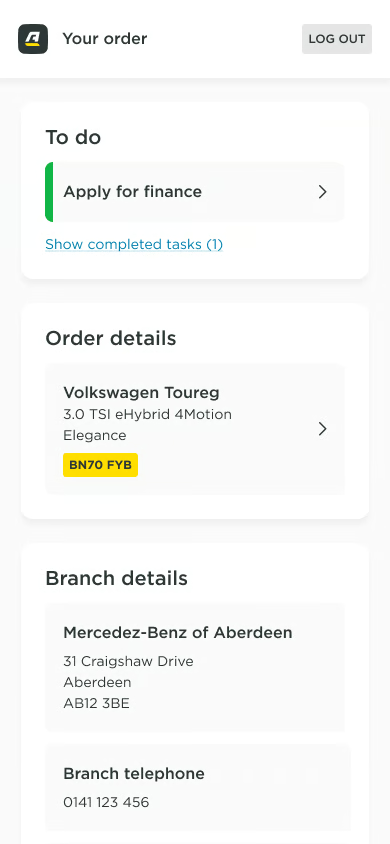
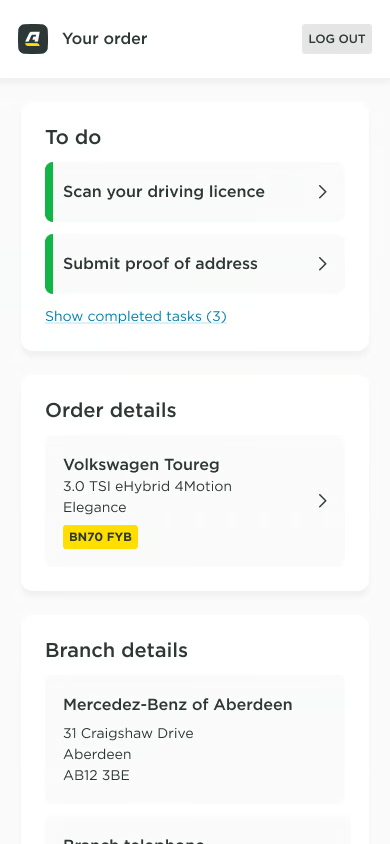
Identity verification was a separate task on the customer’s dashboard. Customers could finish their finance application and believe it had been submitted, but it couldn’t reach a lender until the identity check was complete.
Customers were left waiting for decisions on applications that hadn’t been sent.
The checks created false confidence
A driving licence could fail twice, then automatically pass on the third attempt. Unresolved issues only surfaced when branch staff checked the licence against the customer in person, disrupting the sale.
Verification, finance submission and the branch handover had been designed as separate tasks, even though customers experienced them as one connected journey.
What I changed
Made verification part of applying for finance
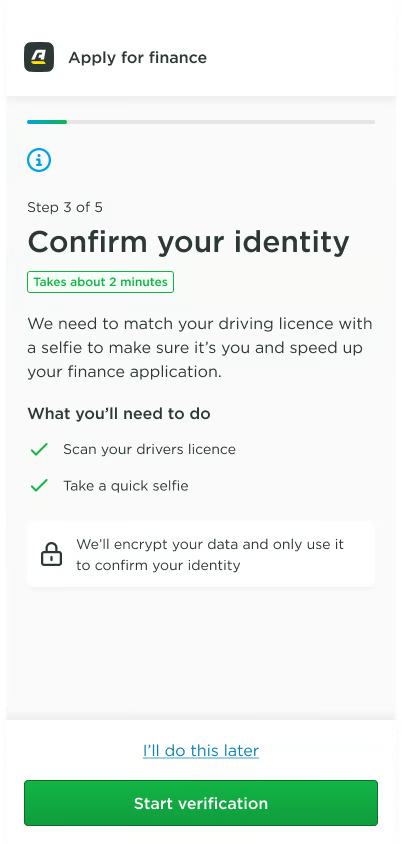
I integrated identity verification directly into the finance application, so customers completed the required checks before submitting. This made the dependency clear and removed the misleading sense that an incomplete application had already reached a lender.
Added a stronger layer of verification
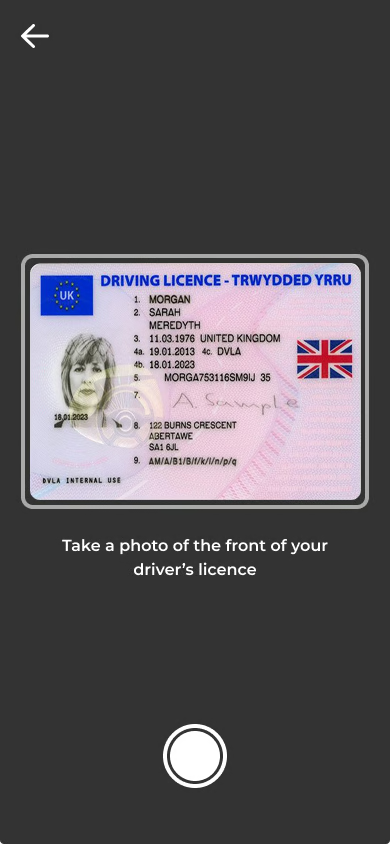
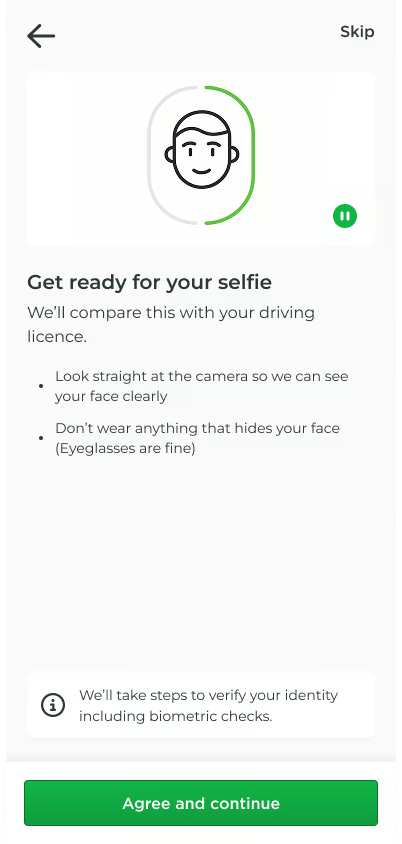
We added a live selfie check to compare the applicant with their driving licence photo. I wrote clear instructions to prepare customers for the check and explain how their biometric information would be used.

Evaluated the whole service, not just the interface
We evaluated the existing provider and two alternatives across the complete customer and branch experience.
We considered:
- How easily customers understood and completed each journey
- The speed and quality of the experience
- How reliably the checks performed
- The information available when something went wrong
- The complexity of integrating each provider into our existing products
- The implications for branch staff and operational processes
One alternative offered a strong customer experience but required a more complex integration. The selected provider performed most consistently in testing and balanced customer, operational and technical needs.
Tested clarity through repeated iteration
Early testing showed that some customers found the live selfie confusing or daunting. Some initially refused because they didn’t understand what was being asked.
Testing showed that “selfie” was more familiar and less intimidating than “video”, so I used it in the instructions. I also moved prompts to where testers naturally looked during the task, after seeing them miss important guidance.
Designed recovery into the service
Customers who needed help or preferred to complete verification in person could skip the online check and receive support at a branch.
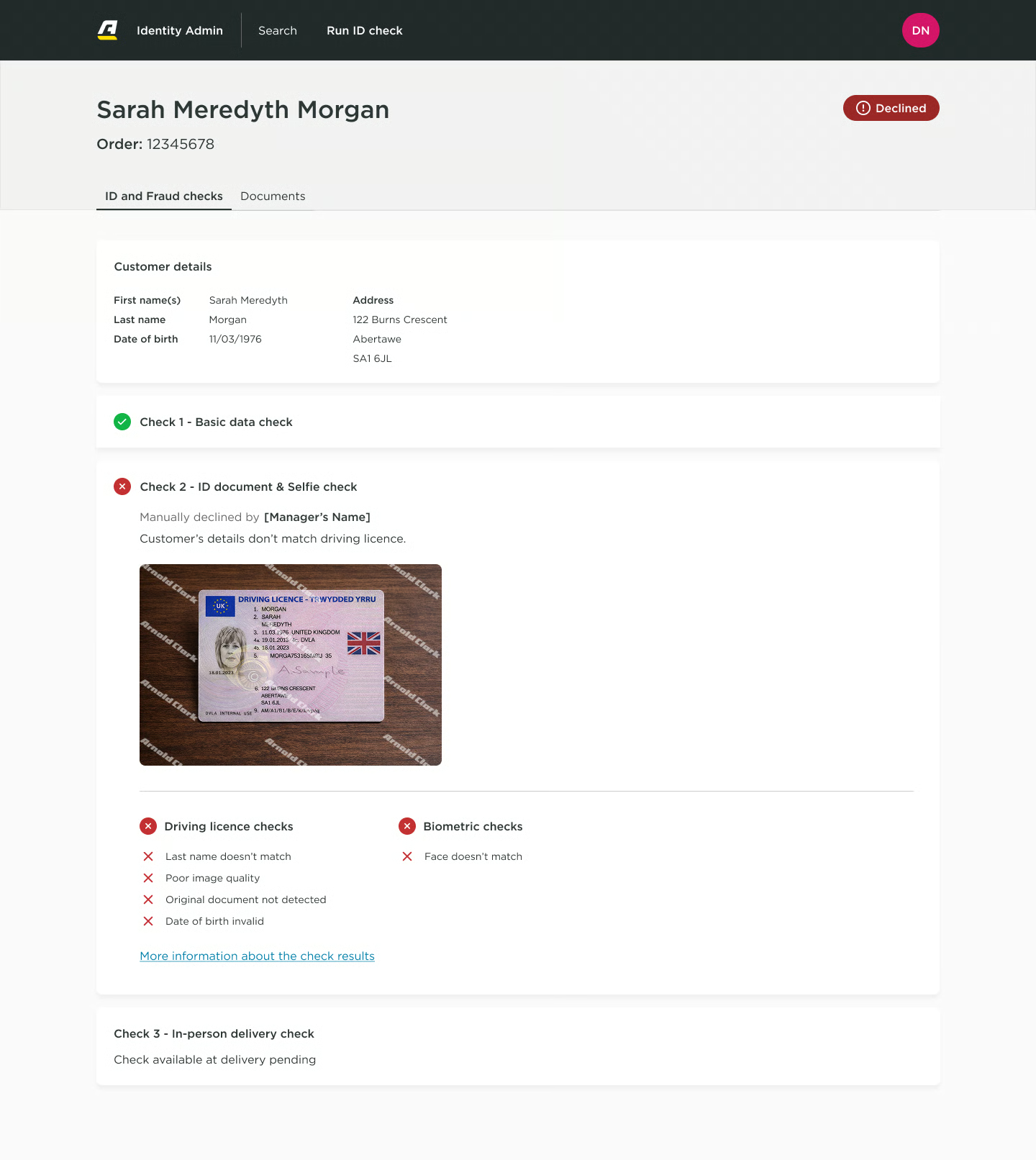
I also designed a staff review tool that surfaced only checks needing attention, with clear reasons for failure.
This allowed staff to understand situations such as:
- An expired driving licence
- Information that did not match
- A family member attempting to complete the application for someone else
- A check that required another submission
Staff could review the evidence, speak to the customer and approve the check or request another submission. Successful checks remained automated.
Rewriting the legal documentation for customers
The existing documentation was repetitive and difficult to navigate. I removed duplication, simplified the language and reorganised it around what customers needed to understand.
I worked through several rounds of review with Legal to preserve the required meaning and meet legal and regulatory obligations.
Outcome
The redesigned service launched in May 2026, before the existing provider’s contract expired, avoiding an unwanted renewal.
For the first two months after launch, no formal complaints about identity verification were recorded, and branches stopped reporting it as a recurring disruption to the sales journey.
How this changed my approach
Make dependencies clear
Customers shouldn’t have to discover that one task depends on another. The journey needs to make clear what is complete and what still needs to happen.
Treat provider selection as a product decision
The strongest customer interface was not enough on its own. Customer understanding, operational fit and technical implementation all had to work together.
Negotiate clarity in regulated experiences
Legal requirements and clear language are not opposing goals. Reaching the right outcome required close collaboration, careful sequencing and repeated refinement.